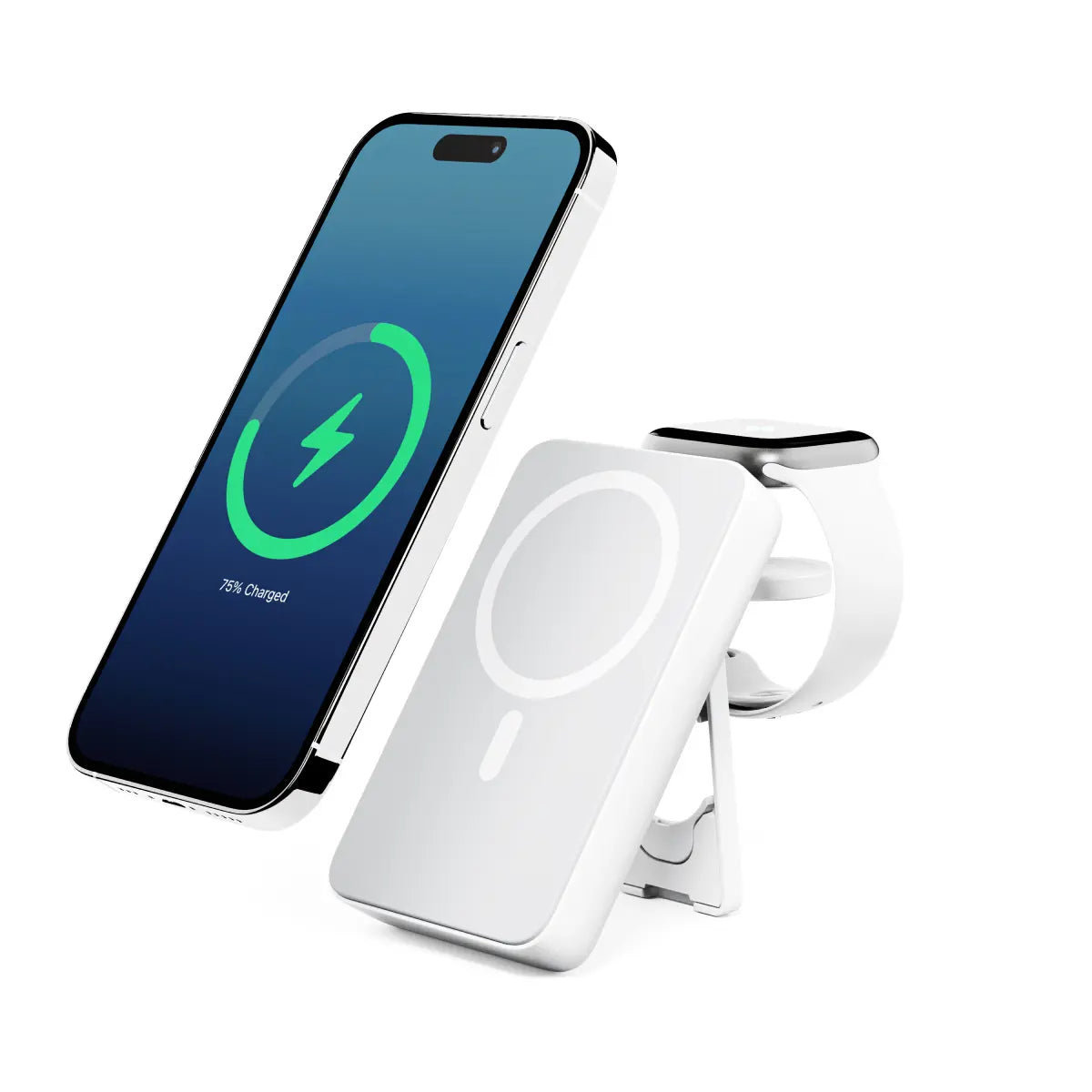
The Technology Behind Wireless Charging: How It Works
Wireless charging is based on a technology known as inductive charging, which uses electromagnetic fields to transfer energy between two objects. This process involves two main components: a charging pad (the transmitter) and a compatible device (the receiver). When the charging pad is plugged into a power source, it generates an alternating current that creates an oscillating magnetic field. The receiver coil, located inside the device, captures this magnetic field and converts it back into electrical energy, which is then used to charge the device's battery. This method provides a seamless and convenient charging experience, eliminating the need for physical connectors.
The efficiency of wireless charging has improved significantly in recent years, leading to widespread adoption across various devices, including smartphones, smartwatches, and even electric vehicles. According to industry reports, the global wireless charging market is expected to reach a valuation of over $30 billion by 2026 due to its growing popularity. As technology continues to advance, we can expect innovations such as faster charging speeds and the ability to charge multiple devices simultaneously, removing the barriers that once limited its use. Overall, wireless charging represents a significant step forward in the convenience of powering our devices.
Counter-Strike is a popular series of multiplayer first-person shooter games that focuses on team-based gameplay. Players can choose to be part of either the terrorist or counter-terrorist team, completing objectives such as bomb defusal or hostage rescue. Additionally, if you're looking to enhance your gaming experience with some great gear, check out the Top 10 iphone 17 pro max accessories to elevate your mobile gaming. The game emphasizes strategy, communication, and skill, making it a favorite among competitive gamers worldwide.
The Environmental Impact of Going Wireless: A Sustainable Future?
The transition to a wireless world offers significant potential for reducing our environmental footprint. With fewer physical materials required for infrastructure, including cables and connectors, the energy consumption associated with production and maintenance can be drastically cut. According to the EPA, replacing wired connections with wireless alternatives can lead to a decrease in carbon emissions as manufacturing processes become less resource-intensive. Additionally, as renewable energy sources become more prevalent, the carbon footprint of wireless technology may shrink even further, paving the way for a more sustainable future.
However, it is essential to consider the environmental costs of wireless technology as well. The production and disposal of devices such as smartphones and routers contribute to electronic waste, which poses serious risks to our ecosystems. To address this, consumers can adopt practices such as recycling old electronics and choosing energy-efficient devices. Furthermore, engaging in a sustainable tech cycle—where devices are designed for longevity and reparability—can lessen the impact of our digital habits. By making responsible choices, we can work toward a balance between the conveniences of wireless technology and the health of our planet.
Is Wireless Charging the Future of Energy Transfer?
The advent of wireless charging technology has sparked conversations about its potential to revolutionize energy transfer. Unlike traditional charging methods that require physical connectors, wireless charging utilizes electromagnetic fields to transfer energy over short distances. This innovation not only enhances convenience—eliminating the need for tangled cords and connectors—but also signifies a leap towards a more efficient energy transfer solution. As more devices, from smartphones to electric vehicles, adopt this technology, it raises a critical question: is wireless charging truly the future of energy transfer?
Several factors suggest that wireless charging could dominate the energy transfer landscape. First, advancements in standards like Qi and resonant inductive coupling promise faster charging capabilities and increased compatibility across devices. Moreover, as sustainability becomes a central theme in technology development, wireless charging aligns with goals for cleaner energy use and reduced electronic waste. However, challenges such as energy loss during transmission and the need for a robust infrastructure remain pertinent. Ultimately, whether wireless charging becomes the norm will depend on overcoming these hurdles and continuing to innovate within this exciting field.